Showing posts with label in defense of. Show all posts

Saturday, November 22, 2008

In Defense Of...Beck - The Information

This isn't really going to be a defense column no more than a "why didn't anyone buy this record" column. Of course, I'm sure that a decent deal of the music I listen to goes through the same quandary of not many people buying the record, but Beck's 2006 album The Information seems like a weird surprise non-success in terms of its commercial aspirations. After earning the third-highest sales of his career with 2005's Guero, Beck was revitalized in the mainstream and also buoyed by the success of the anthemic "E-Pro" and the cute "Girl".

So for a new album, Beck did what he always does best: he made it his own way. After creating probably the most accessible album of his career (excluding Odelay), Beck decided to make an hour-long record that's mostly electronic-based. Using producer Nigel Godrich -- he of producing Radiohead's OK Computer fame -- Beck creates a sound that's completely different than his usual material, and yet is still unmistakably Beck.

And yet, there's a more nervously human side of the man on this record. In amidst songs about dancing alone and elevator music, there's a track called "Think I'm In Love," which is about when an awkward guy falls in love either for the first time or even for the millionth time. Who the person or thing he's in love with is not really the issue. The issue there's so much more meaning in Beck's nervousness. Not that Beck never shifts his personality to his human self, he talked about his summer girl (probably) Marissa Ribisi on Guero and pined away for lost love for the entirety of 2002's Sea Change. But whether it's a true example of the man or not, there's something that Beck never seems to show. Not him as a character or as a guy spouting off about "mouthwash jukebox gasoline." And it goes a long way to leave a lasting impression for this monster of a record.

Video for "Think I'm In Love".

The Information runs sixty-one minutes and twenty-nine seconds, and for the most part, is completely worth the length. The sixty-one minutes is a bit of a misnomer, as ten and a half are thrown onto the intriguing if not necessarily great or even really necessary outro "The Horrible Fanfare/Landslide/Exoskeleton." Still, there's a spectacular amount of noise on this record. All of the tracks feel like they're spinning on from the rhythms of past Beck songs, but don't feel derivative. "Strange Apparition" kind of sounds like Odelay's "Jack-ss" and "Where's It At," but is good enough in its own right to be awesome. Plus, if there's any artist who's surely running out of material to not rip off, it's a man with twelve full-length albums. Beck can be cut a little slack.

The entire album is just so fluid. No song is particularly unlistenable (even the aforementioned outro), and that's quite an accomplishment for any record to achieve. Interesting diversions like "Dark Star" use its orchestral background to near-perfection, while "1000 bpm" plays with electronic conventions. "Nausea" is the perfectly suitable lead single while "Soldier Jane" is an ethereal experience. All of the songs on the album either have a purpose, or are so interesting to listen to that any sort of purpose doesn't matter.

So in short, Beck's The Information isn't really a record that is being defended because it was considered mediocre, when it should be considered great. No, The Information just deserves to be heard. Period.

Wednesday, November 19, 2008

In Defense Of...Audioslave - Self-Titled

In the remnants of the much-beloved, if extremely angry, Rage Against The Machine came a lot of hype for three of the band members' new project called Audioslave. This was to be the perfect merger of the 1990s two core rock sounds: the angry sound of Rage Against The Machine's music and the...uhh...angry sound of Chris Cornell's Soundgarden. In 2002, when their self-titled album was released on the hype of an amazing rock song called "Cochise", everyone expected that Cornell's introspective vocals with the Rage sound would lead to such amazing rock. Instead, they got a record that brought a ton of introspective content and only has a slight semblance to Rage.

I'll readily admit first off that I'd rather listen to Cornell's solo material or the Soundgarden material over Audioslave, and the same goes for Rage in comparison to Audioslave as well. Still, I'd argue that the first Audioslave album contains a nice balance of the hard rock material mixed in with the type of songs that Cornell felt represented his songwriting style. "Cochise" opens up the album with the musical equivalent of a sonic boom in that it's blistering and exhilarating. "Show Me How to Live" is more controlled in its noise, but it exposes the positives of Cornell versus former Rage vocalist Zach de la Rocha in that a "chill out" song never has to be uninteresting. Cornell is a more pure talent than de la Rocha, and a song like "Show Me How to Live" proves it.

Video for "Show Me How to Live".

And as misguided as the Cornell/Morello/Commerford/Wilk pairing showed itself to be on the mostly disappointing Out of Exile and Revelations, on the first record, they seemed to click from the onset. The album's first four tracks were the perfect blend of hard rock and tender vocals. The boys seemed made to actually last longer than five years and three albums. And even more "soft" ballads like "I Am The Highway" and "Shadow on the Sun" had their place, and was a better example of where the group truly could have worked than say "Doesn't Remind Me" from Out of Exile, a track where Cornell boasts that he stares at a lot of things because he's not reminded of anything at all. In turn, we're supposed to feel he's happy about not being depressed by his surroundings, but really...you get the point long before the four minutes are up. Whereas, "I Am The Highway" is more motivating about its message of not being used and doesn't march to an obvious point seconds into the song.

Not all of this album is great, of course. No modern rock record should ever go past one hour in length, and Audioslave reaches 65 minutes. Not to mention that I can barely point out anything of worth on the second half of Audioslave. Still, I find that this record doesn't try to bend to either direction of the spectrum. Cornell doesn't act like he's de la Rocha nor does he get into silly didactic politics, and the Rage guys realize that they don't have to go all out for every song. The tricks of Tom Morello had their place, but with no de la Rocha or the aforementioned didactic political content, neither he nor the rest of the band needed to sound exactly like their previous work. (To ramble on Morello, that's one thing that I appreciate about his stuff. Rage doesn't really sound like Audioslave and certainly neither of them sound like The Nightwatchman. But that point on Morello can be saved for another time.)

While yes, Audioslave did hit a brick wall in terms of direction and commercial success, the band at least has the good charm of that first album, a first album that maybe just deserves that second look.

Sunday, November 16, 2008

In Defense Of...Fall Out Boy - Infinity on High

Okay, let's get this out right off the bat. I can't stand Pete Wentz. Wentz is the embodiment of everything that's wrong with celebrity culture today. He's exploitative, overly demanding, and has almost megalomaniacal control over his band despite the fact that he's in the position that (theoretically) holds the least effect on their sound in that he's the band's bassist. Of course, he's also the band's key songwriter but this is besides the point. The point is that I really just don't like Mr. Wentz.

And yet I thoroughly enjoy his band, including the one that's earned them the most heat for its alleged "sellout" nature, 2007's Infinity on High. Infinity on High is essentially FOB's catchy melodies plastered onto a refined soulful sound with more emphasis on producer Babyface's sense of rhythm than the traditional pop-punk sound. But for pop-punk fans, that serves to be a problem. They don't want any remote change to their sound, thus why a band like Paramore, which arguably sounds like a coughed up copy of FOB (who in themselves were a coughed up version of Take Off Your Pants and Jacket-era blink-182 and Lifetime) replaced with an attractive redhead vocalist as opposed to a man with a funny hat, suddenly becomes huge with the same audiences that embraced 2005's From Under The Cork Tree.

Video for "The Take Over, The Break's Over".

Of course, it's not entirely the change in tone and altering of sound that fans hate, but it seems to harbor the most dislike for the record. And ultimately the record is a perfectly fine pop record that hits the right notes on all cylinders. Especially on singles like "The Take Over, The Break's Over" and "This Ain't A Scene, It's An Arms Race", there is a nice containment of commentary on the modern music industry and Wentz *gasp* gets in a few clever well-written jabs.

Wentz gets the idea of the pop hook, something that nearly every song on Infinity on High has, and yet finds a way to change Fall Out Boy's trajectory. This isn't a sellout move, in all honesty. Well...technically, it is. But none of the tracks on Infinity are nearly as annoying as most of Cork Tree. And it's not like this band never had ridiculous pop tendencies to begin with. "Grand Theft Autumn" is amazingly poppy, almost moreso than any of their famous tracks like "Sugar, We're Going Down" or "Dance, Dance".

Video for "Grand Theft Autumn".


This isn't to say that Infinity on High is the best record ever, though. Just the best of Fall Out Boy's catalog so far. I still can't really like "Hum Hallelujah" as it's related to that coughing up part I brought up from later. (As in, it's reusing a line from "Hallelujah" due to Pete being inspired by Jeff Buckley who covered Leonard Cohen.) And that it seems kind of silly to write about how depressive and suicidal you are in the confines of a pleasant song, even if it's been brought up before as a cool ironic archetype from the 90s.

Still, I like FOB for their simplicity at the end of the day. People shouldn't apologize for making pop, and at the very least, Wentz and his group aren't full-on teases with zero sense for how to write like most pop artists of their time(that's meant in a musical sense, not in the "showing your privates" sense). They're not anything legendary, but neither is a group like the Foo Fighters, who do the same poppy hook formula and people like them all the same.

Thursday, November 13, 2008

In Defense Of...John Mayer

If you've been remotely alive in the 21st century, you'll know that two modern crests of singer-songwriter pop are two artists simply known as Jack Johnson and John Mayer.

Jack Johnson seems like the type of guy who never had one bad day in his life. His dog, his wife, and his pet guinea pig could all die at the same time, but if there's a beach nearby, his sorrow would just wash away. And then he'd get high and write songs for a movie version of Curious George.

John Mayer seems like the guy that would be more vapid and uncaring about his work. In between making albums, (and clearly having a resemblance to this blog writer) he has had a relationship with pretty much every famous person you've ever wanted to...meet. Jessica Simpson, Jennifer Aniston, Jennifer Love-Hewitt, and etc. prove that the guy's basically proven that his music and personality is so charming that he's everything women love and that men frickin' despise. His songs get passed off as cornball -- which they are if we're referring to songs like the ridiculously idealistic "No Such Thing" -- but he gets shunned for having no musical depth or discernible talent, which isn't really true at all.

Mayer is a pop idealist. He has progressed to writing songs that know fullwell that they are intended for mainstream audiences, but never over-simplifies his lyrics and adds a nice pastiche of influences to his sound. This is probably most evident on his 2006 album Continuum, which actually has some nice strumming and a pretty good cover of Jimi Hendrix's "Bold as Love". And anybody that can do a Hendrix cover that doesn't disgrace Hendrix's music, they deserve to be honored.

I'm not going to act like Mayer's a great artist by any stretch of the imagination. He overemphasizes themes of love in his music, but he has a nice interest in the human condition. On another Continuum track, "Waiting on the World to Change", he dives into why people his age -- i.e. the 20somethings crowd -- are so apathetic about the shape of the world and that maybe a sense of optimism could help rile the people. It's an effortless pop song that is done with a ton of effort. Happy chords drown out any sense of negativity you could find, and while most cynics would hate it for Mayer's idealism, the song works as pop and as a well-written message song. Mayer doesn't beat the audience over the head, despite the simple message. He isn't commanding his audience to blame something on somebody else, but rather BE the change however you see it. It's a cheesy idea, but I'd rather have Mayer's simplicity than a band like Green Day droning on about how much they hate the President without even thinking about the changes they would do to make things better.

His style of playing has evolved. He's dug more into artists such as the legendary Curtis Mayfield to get a sort of old-school R&B sound to mix in with the acoustic nature of his works. He's had less of the cornball lyrics with each successive album that he has made, and even got into a fight with Columbia Records over the release of Continuum. He even made a stirring cover of Tom Petty's "Free Fallin'" that, as per usual, a lot of girls love and not many guys have even heard it.

So yeah, even if he's basically living a fantasy life, I like the guy. Plus, he's pretty funny from time to time actually. So that clearly has to mean the guy's not as grating as your average singer-songwriter. Right?

Tuesday, November 11, 2008

In Defense Of...90s Rock

Prior to the writing of this entry, I listened to a song released in 1998 from Shawn Mullins called "Lullaby." This is a song that no one remembers in the slightest unless you heard the chorus with its comfortable inflection of "rock-a-bye", despite the fact the song's called "Lullaby". "Lullaby" is a wretched horrible song, but it's great at the same time because I remember it from when I was a kid. The same would go for the Verve Pipe's "The Freshman" and New Radicals' "You Only Get What You Give".

Now when I define 90s rock, I don't really mean stuff like Nirvana, Foo Fighters, Rage Against The Machine, etc. that became beloved music that also was popular. No, I mean the era in the late 1990s where Bush's "Glycerine" and "Machinehead" ruled rock radio. And yet no one talks about how great of a band Bush is. Which...they're really not. But they made simply great songs, and "Glycerine" even stands the test of time as a simple, well-composed pop song that I'd gladly play in amongst (PRETENTIOUSNESS WARNING) my playlist of Sonic Youth, Caribou, St. Vincent, and The Shins.

In fairness, these songs are products of their time. There was a small time in the 1990s where pop music could contain depressing content as long as the song had a happy sound at the end of the day. After all one of my favorite songs from the era was Third Eye Blind's "Semi Charmed Life". And about 2% (at most) who listened to that song got that it was talking about continued drug use building up to an overdose. I'm guessing slightly more people figured out their later hit "Jumper" was about talking down a potential suicide case.

Now, I'll gladly reminisce a song like "Semi Charmed Life" but I mostly can't stand popular radio, and the reason is pretty obvious. These songs are comfortable because they were the music you heard as a kid. The great advantage to being a kid is that most kids would listen to anything they had put in front of them. I even *gasp* bought a Backstreet Boys cassette tape when I was around 10. Oh, the things I'll shamefully admit on the internet to an audience of 2.

So, did I like these crappy songs because they had a safe radio sound when I denounce music today for having that same sound? Yeah, pretty much. But there is a perfectly fine place for nostalgia. Just because you hate rock radio's mix of Hinder, Nickelback, and Three Days Grace doesn't mean you have to throw away that long lost Lemonheads record (though, the Lemonheads are legitimately solid all the same), and listen to it. Nostalgia has its place. After all, people still ironically love hair metal.

Sunday, November 9, 2008

In Defense Of...Nas

Welcome to the first edition of In Defense Of, where I more or less get to say why an artist deserves more praise or more attention. (So basically, a formal version of everything else I do now.)

This edition begins with a rapper from New York most famous for his tales of street life who has evolved in the 21st century to become an elder statesman of sorts about hip-hop music in general.

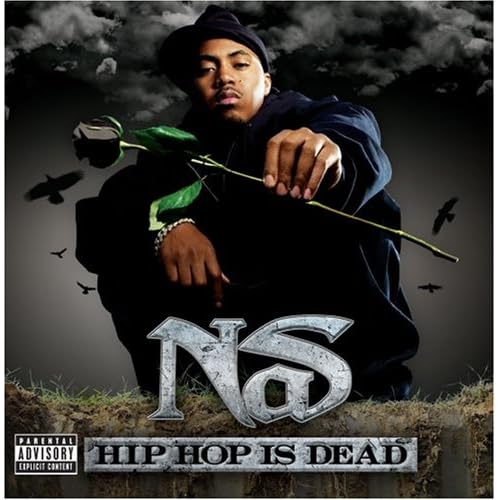
Nasir Jones spent the early 1990s getting out of the troubles of street life to create one of the most universally beloved albums in rap history in 1995's Illmatic. Everyone from those who knew Nas's streets to craggy old white critics loved the true grit that Jones showed in his unflinching portrayal of the very street life he escaped. In fact, they loved it so much that every album since then has more or less been compared -- often unfairly -- to his masterwork. Even records as culturally important as 2006's Hip Hop is Dead or his most recent stand for the issue of racism on 2008's Untitled has gone under fire for Nas not being like Nas.

Ultimately, the argument seems moot. While Nas has his pulse on the streets of Queens, a man earning the money and living the lifestyle that Mr. Jones does can't simply go back again to the stories he made famous in 1995. Unlike many rappers who claim that they lived the harsh lifestyles of America's roughest streets, Jones has the pedigree to back it up. So to suddenly revisit a different time period would be not only pandering to the people who want to hear what their version of Nas is, but that it would be disingenuous considering what we all know about Nas right now.


This is why his "elder statesman" releases, specifically the aforementioned Hip Hop is Dead and Untitled, are evidence of why Nas is one of the best currently active rappers in the genre right now.

Both releases examine topics that Nas faintly covered on Illmatic, but never really gave much thought at the time in using such a massive platform to talk about these topics. Hip Hop is Dead is a lament about the ridiculous commercialization of the genre, to the point that groups like D4L, Dem Franchize Boyz, and Soulja Boy have had steady careers in the genre, while artists "with a legacy" like KRS-One have struggled to keep up in terms of sales.

Video for "Hip Hop is Dead."


Thus Nas, one of the few veterans of hip-hop suddenly not washed away by the genre's changing tide, feels fit to comment on what made the genre intriguing in the first place and in turn reviving the idea of "intelligent mainstream hip-hop." Keep in mind that less than a year after the album's release that Kanye West's Graduation had the biggest opening week sales of any hip-hop record in nearly five years, though, that later was toppled by Lil' Wayne's The Carter III a mere few months later. And of course, that same year also saw the ridiculous craze of "Crank Dat," so the genre has a ways to go but artists like El-P, Aesop Rock, Sage Francis, Saul Williams, and even the more mainstream Lupe Fiasco have breathed creativity into hip-hop in the 21st century.


Untitled, meanwhile, is an entirely different beast. To know the true essence of the album's message, you must remember the album's original title, which was to be called the N-word. Nas here digs into every element that divides ethnicities in general, from the mostly incorrect stereotypes that divide black people and white people to the fact that his race still holds up the N-word as significant (which it is) when he feels that positive reinforcement means that the word could just as much be like any other word in the English vernacular. But before the listener gets the idea that this is all about attacking racism and dissecting what one word has done to stereotype a race of people, Nas takes another left turn. He talks about the culture of equality for all races, the idea that America is potentially as savage as any other region in the world if the people don't discover a sense of unity, as shown in "America."

Video for "Hero," a single from Untitled.


With this in mind, Untitled is easily the strongest release Nas has made since Illmatic. That's always a bold statement to make, but there's a sense of importance that was made apparent through most of Hip Hop is Dead and nearly all of Untitled. Not to mention that Nas' Achilles heel of less than stellar musical backing is solved by taking in fine producers like Polow Da Don and stic.man and having them simply work their magic.

While there isn't a credible defense to all of his work, which is to say that Street's Disciple, God's Son, Stillmatic, and I Am... all have good tracks but aren't amazing records (and the less brought up about Nastradamus the better), this isn't an excuse to pass off Nasir Jones's hip-hop career. In as much as I love early 1990s hip-hop and Illmatic's amazing stories, there is a lot more to Nasir Jones than a good album of street slang. There is a fully realized dynamo that has delivered a solid body of work, even if the middle albums are the nadir that eventually has risen back up. Not to mention that Nas has even "beaten" his comtemporaries in quality tracks, because let's be honest. Nas's "Ether" is such a better song than Jay-Z's "Takeover."

And even as he grows older and wiser, I don't really think Nas will ever stop being as blunt as he's been since day one. After all, that's unlike the guy who wrote about his own New York state of mind to stop having his own opinion.

(Album art courtesy of Amazon.com and Def Jam Records.)